Say less, influence more: Four tips in two minutes
At J. Walcher Communications, we know energy and time are humans’ most valuable currency. Kids, colleagues and clients are all vying for your attention.
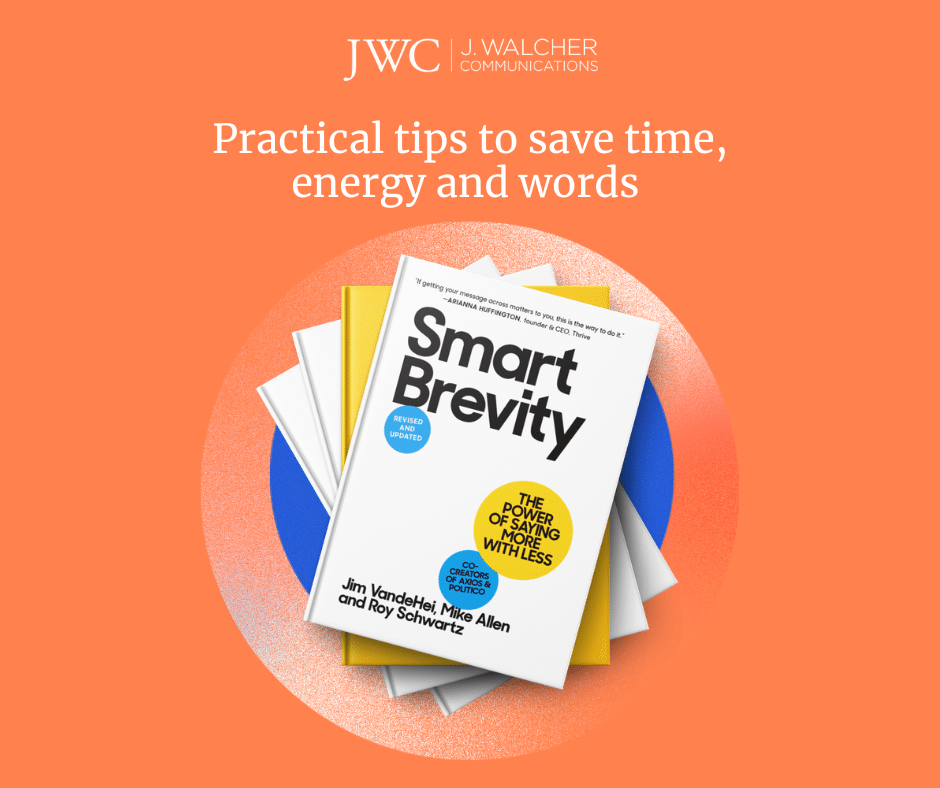
To help our clients connect more effectively, I read “Smart Brevity,” a communications approach developed by the founders of Axios and Politico that focuses on “the power of saying more with less.” Each week, we talk about takeaways from the book, and I’m sharing my top ones below.
Why it matters: By trimming our emails, speeches and meetings, we’re better heard and more influential. We get to the point without burying the lede.
- From Smart Brevity: “Think about what you actually read. I know. So why would you force-feed your audience more than that?”
- One of my favorite examples comes from Michael Pollan’s “In Defense of Food,” which is summarized by seven words: “Eat food. Not too much. Mostly plants.”
Where we go wrong: Lengthy emails and speeches lose and confuse people. We’re guilty of saying the following:
- “It seems to me that” and “Here’s what I think”
- “To piggyback” or “to dovetail”
- “The fact of the matter is that…”
Wasted words. Our human attention span has shrunk to 40 seconds, so why write like you have someone’s focus for five minutes?
We read the book so you do not have to (though I recommend it to any communicator). Here are four tips and examples in two minutes from Axios’s Smart Brevity – our team applies them to our emails, press releases and pitches, meetings and more.
- Be short, not shallow: You would not say “an elongated yellow fruit” to describe a banana, would you?
- From the book: “Delete, delete, delete. What words, sentences or paragraphs can you eliminate before sending? Every word or sentence you can shave saves the other person time. Less is more – and a gift.”
- Add emojis and anchors: Grab readers’ attention with clear phrases that explain the context, such as “ONE big thing” (for the big update), “Go deeper” (for helpful details), “By the numbers” (for figures and stats) and my favorite, “Why it matters.”
- Space your copy: Bullet points help readers skim for the most essential information and helpful details. Bold words, figures or names to help the skimmers catch key updates.
- Get on the same page: Right from the start, state your intention clearly:
- Meetings: “Our goal today is to list out next steps for this event.”
- Speeches: “This vote matters because you, your family and your neighbors need help.”
- Emails: “Our new company policy affects you in three ways: ___”
As the book concludes, “these tips and tricks will help you win the war for attention – and make you be heard again.”